
196 lines
8.2 KiB
Markdown
196 lines
8.2 KiB
Markdown
jOOQ
|
|
====
|
|
|
|
jOOQ is an internal DSL and source code generator, modelling the SQL language as a type safe Java API to help you write better SQL.
|
|
|
|
Its main features include:
|
|
|
|
- [The source code generator](https://blog.jooq.org/why-you-should-use-jooq-with-code-generation/)
|
|
- The [DSL API for type safe query construction](https://www.jooq.org/doc/latest/manual/sql-building/dsl-api/) and [dynamic SQL](https://www.jooq.org/doc/latest/manual/sql-building/dynamic-sql/)
|
|
|
|
Secondary features include:
|
|
|
|
- [DAOs](https://www.jooq.org/doc/latest/manual/sql-execution/daos/)
|
|
- [Data export](https://www.jooq.org/doc/latest/manual/sql-execution/exporting/) and [import](https://www.jooq.org/doc/latest/manual/sql-execution/importing/)
|
|
- [Data type conversion](https://www.jooq.org/doc/latest/manual/sql-execution/fetching/data-type-conversion/)
|
|
- [DDL statement support](https://www.jooq.org/doc/latest/manual/sql-building/ddl-statements/)
|
|
- [DML statement support](https://www.jooq.org/doc/latest/manual/sql-building/sql-statements/)
|
|
- [Diagnostics](https://www.jooq.org/doc/latest/manual/sql-execution/diagnostics/)
|
|
- [Dialect agnosticity for 30+ RDBMS](https://www.jooq.org/download/#databases)
|
|
- [Embedded types](https://www.jooq.org/doc/latest/manual/code-generation/codegen-embeddable-types/)
|
|
- [Formatting and pretty printing](https://www.jooq.org/doc/latest/manual/sql-building/queryparts/pretty-printing/)
|
|
- [Implicit joins](https://www.jooq.org/doc/latest/manual/sql-building/sql-statements/select-statement/implicit-join/)
|
|
- [Kotlin support](https://www.jooq.org/doc/latest/manual/sql-building/kotlin-sql-building/)
|
|
- [Mapping](https://www.jooq.org/doc/latest/manual/sql-execution/fetching/recordmapper/)
|
|
- [Meta data API](https://www.jooq.org/doc/latest/manual/sql-execution/meta-data/)
|
|
- [Mocking API for JDBC](https://www.jooq.org/doc/latest/manual/sql-execution/mocking-connection/)
|
|
- [Model API for use in traversal and replacement](https://www.jooq.org/doc/latest/manual/sql-building/model-api/)
|
|
- [`MULTISET` and `ROW` nested collections and records](https://blog.jooq.org/jooq-3-15s-new-multiset-operator-will-change-how-you-think-about-sql/)
|
|
- [Multitenancy](https://www.jooq.org/doc/latest/manual/sql-building/dsl-context/custom-settings/settings-render-mapping/)
|
|
- [Parser (and translator)](https://www.jooq.org/doc/latest/manual/sql-building/sql-parser/)
|
|
- [Pattern based transformation](https://www.jooq.org/doc/latest/manual/sql-building/queryparts/sql-transformation/transform-patterns/)
|
|
- [Plain SQL templating](https://www.jooq.org/doc/latest/manual/sql-building/plain-sql-templating/)
|
|
- [Procedural logic API](https://blog.jooq.org/vendor-agnostic-dynamic-procedural-logic-with-jooq/)
|
|
- [Reactive support via R2DBC](https://www.jooq.org/doc/latest/manual/sql-execution/fetching/reactive-fetching/)
|
|
- [Readonly columns](https://www.jooq.org/doc/latest/manual/code-generation/codegen-advanced/codegen-config-database/codegen-database-readonly-columns/)
|
|
- [Scala support](https://www.jooq.org/doc/latest/manual/sql-building/scala-sql-building/)
|
|
- [Schema diff](https://www.jooq.org/doc/latest/manual/sql-building/schema-diff/)
|
|
- [SQL transformation](https://www.jooq.org/doc/latest/manual/sql-building/queryparts/sql-transformation/)
|
|
- [SQL translation](https://www.jooq.org/translate/)
|
|
- [Stored procedure support](https://blog.jooq.org/the-best-way-to-call-stored-procedures-from-java-with-jooq/)
|
|
- [Transaction API](https://www.jooq.org/doc/latest/manual/sql-execution/transaction-management/)
|
|
- [UpdatableRecords for simplified CRUD, with opt-in optimistic locking](https://www.jooq.org/doc/latest/manual/sql-execution/crud-with-updatablerecords/simple-crud/)
|
|
- And much more
|
|
|
|
Examples
|
|
========
|
|
|
|
Typesafe, embedded SQL
|
|
----------------------
|
|
|
|
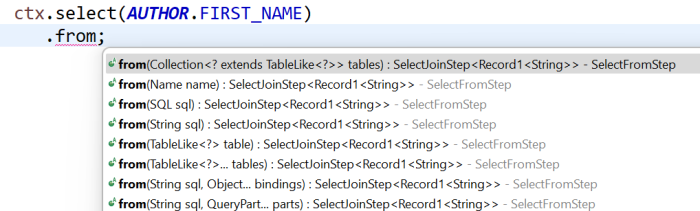
jOOQ's main feature is typesafe, embedded SQL, allowing for IDE auto completion of SQL syntax...
|
|
|
|
|
|
|
|
... as well as of schema meta data:
|
|
|
|

|
|
|
|
This allows for preventing errors of various types, including typos of identifiers:
|
|
|
|
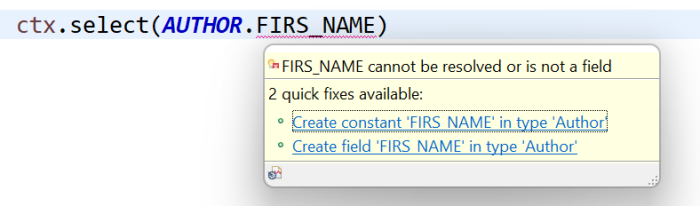
|
|
|
|
Or data type mismatches:
|
|
|
|
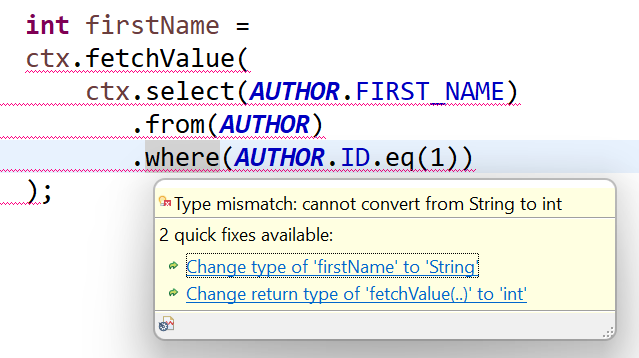
|
|
|
|
[The examples are from the code generation blog post](https://blog.jooq.org/why-you-should-use-jooq-with-code-generation/).
|
|
|
|
A more powerful example using nested collections
|
|
------------------------------------------------
|
|
|
|
For many more examples, [please have a look at the demo](https://github.com/jOOQ/demo). A key example showing jOOQ's various strengths is from the [`MULTISET` operator announcement blog post](https://blog.jooq.org/jooq-3-15s-new-multiset-operator-will-change-how-you-think-about-sql/):
|
|
|
|
Given these target DTOs:
|
|
|
|
```java
|
|
record Actor(String firstName, String lastName) {}
|
|
record Film(
|
|
String title,
|
|
List<Actor> actors,
|
|
List<String> categories
|
|
) {}
|
|
```
|
|
|
|
You can now write the following query to fetch films, their nested actors and their nested categorise in a single, type safe query:
|
|
|
|
```java
|
|
List<Film> result =
|
|
dsl.select(
|
|
FILM.TITLE,
|
|
multiset(
|
|
select(
|
|
FILM.actor().FIRST_NAME,
|
|
FILM.actor().LAST_NAME)
|
|
.from(FILM.actor())
|
|
).as("actors").convertFrom(r -> r.map(mapping(Actor::new))),
|
|
multiset(
|
|
select(FILM.category().NAME)
|
|
.from(FILM.category())
|
|
).as("categories").convertFrom(r -> r.map(Record1::value1))
|
|
)
|
|
.from(FILM)
|
|
.orderBy(FILM.TITLE)
|
|
.fetch(mapping(Film::new));
|
|
```
|
|
|
|
The query is completely type safe. Change a column type, name, or the target DTO, and it will stop compiling! Trust only your own eyes:
|
|
|
|
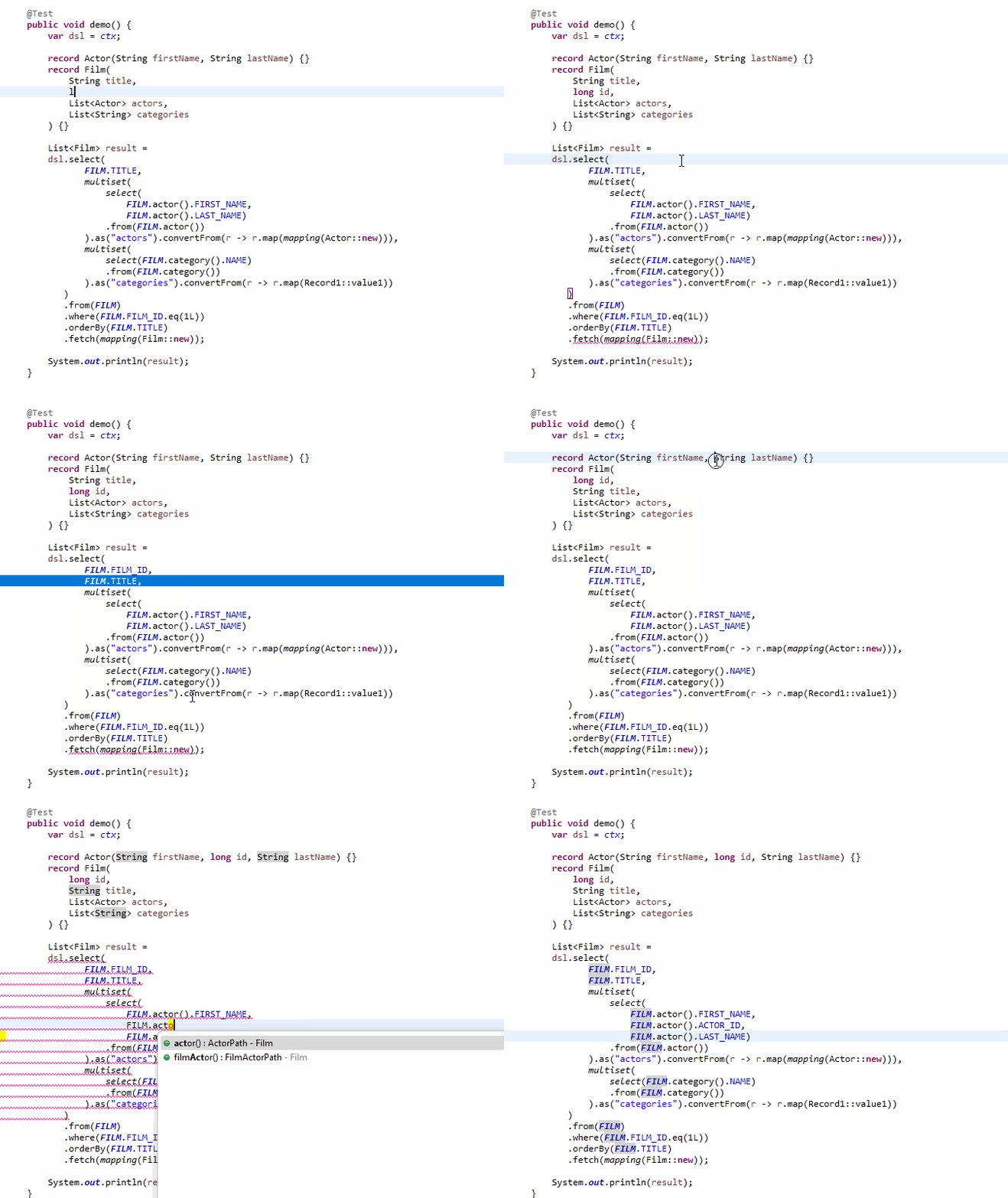
|
|
|
|
And here you see the nested result in action from the logs:
|
|
|
|

|
|
|
|
How does it work? Look at this annotated example:
|
|
|
|
|
|
```java
|
|
List<Film> result =
|
|
dsl.select(
|
|
FILM.TITLE,
|
|
|
|
// MULTISET is a standard SQL operator that allows for nesting collections
|
|
// directly in SQL. It is either
|
|
// - supported natively
|
|
// - emulated using SQL/JSON or SQL/XML
|
|
multiset(
|
|
|
|
// Implicit path based joins allow for simpler navigation of foreign
|
|
// key relationships.
|
|
select(
|
|
FILM.actor().FIRST_NAME,
|
|
FILM.actor().LAST_NAME)
|
|
|
|
// Implicit correlation to outer queries allows for avoiding repetitive
|
|
// writing of predicates.
|
|
.from(FILM.actor())
|
|
|
|
// Ad-hoc conversion allows for mapping structural Record2<String, String>
|
|
// types to your custom DTO using constructor references
|
|
).as("actors").convertFrom(r -> r.map(mapping(Actor::new))),
|
|
multiset(
|
|
select(FILM.category().NAME)
|
|
.from(FILM.category())
|
|
).as("categories").convertFrom(r -> r.map(Record1::value1))
|
|
)
|
|
.from(FILM)
|
|
.orderBy(FILM.TITLE)
|
|
.fetch(mapping(Film::new));
|
|
```
|
|
|
|
The generated SQL query might look like this, in PostgreSQL:
|
|
|
|
```sql
|
|
select
|
|
film.title,
|
|
(
|
|
select coalesce(
|
|
jsonb_agg(jsonb_build_object(
|
|
'first_name', t.first_name,
|
|
'last_name', t.last_name
|
|
)),
|
|
jsonb_build_array()
|
|
)
|
|
from (
|
|
select
|
|
alias_78509018.first_name,
|
|
alias_78509018.last_name
|
|
from (
|
|
film_actor
|
|
join actor as alias_78509018
|
|
on film_actor.actor_id = alias_78509018.actor_id
|
|
)
|
|
where film_actor.film_id = film.film_id
|
|
) as t
|
|
) as actors,
|
|
(
|
|
select coalesce(
|
|
jsonb_agg(jsonb_build_object('name', t.name)),
|
|
jsonb_build_array()
|
|
)
|
|
from (
|
|
select alias_130639425.name
|
|
from (
|
|
film_category
|
|
join category as alias_130639425
|
|
on film_category.category_id = alias_130639425.category_id
|
|
)
|
|
where film_category.film_id = film.film_id
|
|
) as t
|
|
) as categories
|
|
from film
|
|
order by film.title
|
|
```
|
|
|
|
This particular example is explained more in detail in the [`MULTISET` operator announcement blog post](https://blog.jooq.org/jooq-3-15s-new-multiset-operator-will-change-how-you-think-about-sql/). For many more examples, [please have a look at the demo](https://github.com/jOOQ/demo). |